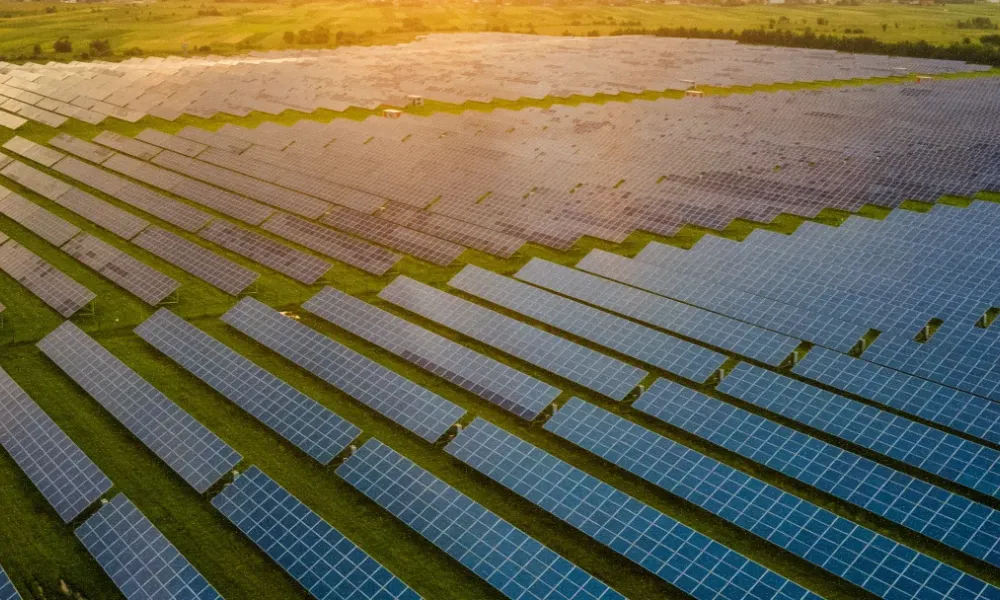
Sustainability is now becoming a business priority and a continuity between electricity and traffic in 2026. Different companies are moving towards the use of industrial solar panels as a sustainable source of energy in the long term.
Nonetheless, before such an impactful shift, a decision concerning solar panels is usually centred on three significant factors: ROI, cost and payback period. It is also essential to know these factors in a more detailed way, as it will transform solar panels as a cost-effective move in terms of industrial operations.
Cost of Industrial Solar Panels in 2026
The price of the installation of industrial solar panels in India is highly dependent on numerous practical considerations, such as the type of installation, the size of the system, and the quality of the components. In 2026, competition in pricing has increased due to higher manufacturing levels and economies of scale.
On an average basis, industrial solar installation falls within the below-mentioned range:
- Large systems get benefits from lower per-unit costs.
- Rs. 35000 to Rs. 45000 per KW crucially depends on project size and configuration
- Ground-mounted projects are usually more cost-efficient than rooftop systems at scale.
For example, a mid-range 500 kW industrial setup may need an investment of around ₹1.7 to ₹2.2 crore.
What Influences the Cost?
The final cost is not fixed and varies based on the following:
- Type of solar modules (Mono PERC, bifacial, etc.)
- Quality of inverters and mounting structures
- Site conditions and installation complexity
- Location and local policy approvals
- Engineering and execution expertise
A well-designed system may cost slightly more upfront but delivers better performance over time.
ROI of Industrial Solar Panels
Return on investment is one of the strongest reasons why industries are adopting solar energy. Unlike many capital expenditures, industrial solar panels start generating measurable financial returns from the first year itself.
In 2026, typical ROI trends for industrial solar projects include:
- Annual ROI ranging between 18% and 25% in most cases
- Electricity cost savings of 40% to 70%, depending on usage patterns
- Long-term returns extending over 25 years of system life
For high-consumption industries, solar acts as a hedge against rising electricity tariffs, which typically increase by 4–6% annually.
Key Drivers of ROI
The financial performance of industrial solar panels depends on several variables:
- Daytime energy consumption (higher usage improves savings)
- Local electricity tariffs
- System efficiency and maintenance quality
- Net metering policies
- Tax benefits such as accelerated depreciation
When these factors are optimised, solar installations often outperform traditional investments.
Payback Period in 2026
The payback period refers to the time required to recover the initial investment through savings. For industrial solar projects, this period has become increasingly attractive.
In 2026, most installations fall within:
- 3 to 5 years for standard industrial systems
- 3 to 4 years for rooftop installations under favorable conditions
- Up to 5 years for large ground-mounted systems
Once the system reaches its payback point, the electricity generated is effectively at minimal cost for the remaining lifespan, which can exceed 25 years.
Why Payback is Faster for Industries
Compared to residential systems, industrial setups recover costs faster due to:
- Higher electricity tariffs
- Larger system sizes leading to economies of scale
- Continuous energy consumption during solar generation hours
This makes industrial solar panels one of the few infrastructure investments that combine operational savings with predictable returns.
Long-Term Financial Benefits
Beyond ROI and payback, solar installations offer sustained financial advantages:
- Significant reduction in monthly electricity expenses
- Protection against tariff fluctuations
- Improved cash flow after payback
- Enhanced asset value for industrial facilities
Over a 25-year period, businesses can achieve substantial cumulative savings, often running into multiple times the initial investment.
Why Choosing the Right Partner Matters
While cost and ROI are important, execution quality plays a critical role in achieving expected results. Poor system design or substandard components can affect performance and delay returns.
This is where an experienced partner like Future Solar becomes relevant. With a structured approach to planning, engineering, and installation, Future Solar ensures that industrial solar panels are designed for maximum efficiency and long-term reliability.
Their focus typically includes:
- Accurate load analysis and system sizing
- Use of reliable and efficient components
- Professional installation and commissioning
- Ongoing monitoring and maintenance support
Such an approach helps businesses achieve the projected ROI without operational disruptions.
Investing in industrial solar panels in 2026 is not only an environmental choice; it is also a viable, economically sound decision. As the cost of installation is now more competitive, ROI is high, and the payback period is as short as several years; solar energy is still a feasible option in industrial development.
Solar is a reliable investment for businesses considering long-term energy strategies, as it is one of the best combinations of cost savings, predictable returns, and sustainability. The collaboration with a well-structured service provider such as Future Solar is another step that can guarantee that the current investment offers a stable and measurable value in the long run.