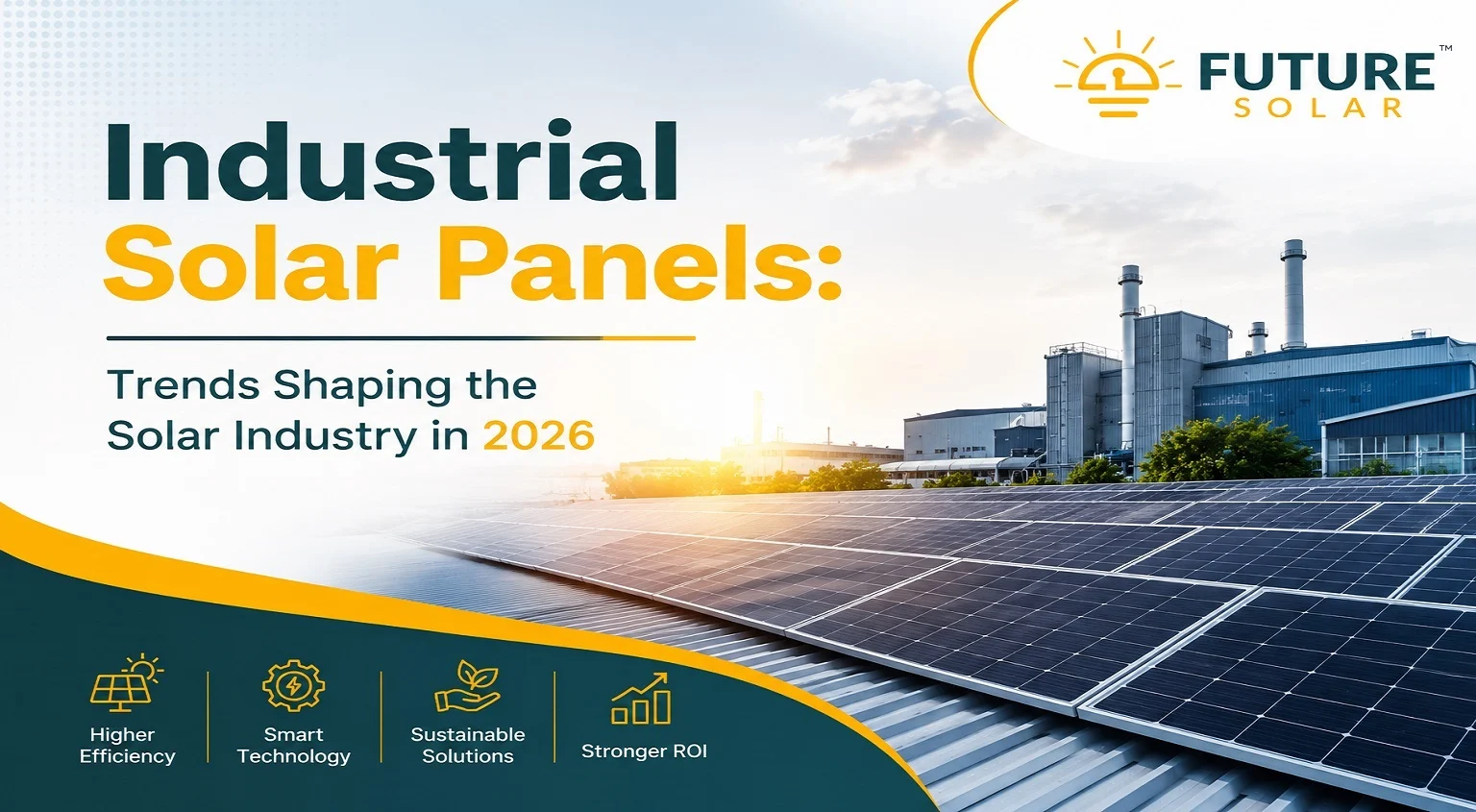
The solar market has developed incredibly fast and 2026 is a critical year for companies to realise their objectives in their path to clean energy. The increasing cost of electricity, commitment towards green energy, supportive government policies and progress in technology have forced companies across industries to rethink how electricity is produced and consumed. Solar panels for industries have now become inevitable at factories, warehouses, commercial buildings, logistics centres and vast industrial complexes.
The concept of industrial solar project development is no longer about saving costs for electricity. Companies are trying to find smart, efficient and sustainable sources that will support their future growth and responsibility.
Let’s take a glimpse at key trends that will be driving the industrial solar panel market in 2026
Higher Efficiency Solar Modules
Increased adoption of high-efficiency solar modules is one of the major transformations within the solar market. Companies require high energy yields within the limited space available in their ground-mounted and rooftop installations.
Present-day industrial solar panels produce far higher power than previous models. TOPCon, N-Type, and other emerging technologies contribute to generating more energy at a reduced project lifetime cost.
For industrial users, this means:
- Higher power generation per square meter
- Better performance in challenging weather conditions
- Improved return on investment
- Reduced energy dependence on conventional power sources
As efficiency continues to improve, industries can generate more electricity without requiring additional installation space.
Increased Focus on Energy Independence
Power disruptions and fluctuating electricity prices remain major concerns for industrial facilities. In 2026, more companies are investing in Industrial Solar Panels to gain greater control over their energy consumption.
Rather than relying entirely on utility providers, businesses are choosing solar systems that can meet a significant portion of their daily energy requirements. This shift is helping organisations:
- Reduce operational costs
- Improve energy security
- Protect against rising power tariffs
- Enhance business continuity
For industries operating around the clock, solar energy has become a strategic asset rather than simply an alternative energy source.
Solar Plus Energy Storage Is Becoming Mainstream
Another trend transforming the market is the growing integration of battery storage systems with Industrial Solar Panels.
In recent years, battery technology has improved immensely. Industrial facilities now have viable and affordable means to store energy, allowing companies to utilise any solar power generated over the course of the day and apply it during periods of peak demand or power outages.
Key advantages include the following:
- Better utilisation of solar energy
- Reduced dependency on the grid
- Improved power reliability
- Enhanced operational efficiency
As storage solutions become more affordable, the combination of solar and batteries is expected to become a standard feature in industrial energy systems.
Digital Monitoring and Smart Energy Management
The role of technology in improving solar system performance is becoming more significant. Industrial solar panels are advanced modern devices and are increasingly paired with modern monitoring systems and smart analytical tools.
Energy production, usage trends, system performance and maintenance needs are readily identifiable on a real-time basis by businesses.
Benefits of smart monitoring include:
- Early identification of performance issues
- Improved maintenance planning
- Better energy management decisions
- Increased system efficiency
With data-driven insights, industries can maximise the value of their solar investment and ensure consistent performance throughout the year.
Sustainability Is Driving Corporate Decisions
Environmental responsibility is no longer optional for many businesses. Customers, investors and stakeholders increasingly expect companies to demonstrate genuine sustainability efforts.
Installing Industrial Solar Panels allows organisations to significantly reduce carbon emissions while supporting broader environmental goals.
Many industrial companies are using solar energy to:
- Meet ESG objectives
- Strengthen brand reputation
- Support green manufacturing initiatives
- Align with global sustainability standards
In 2026, sustainability is becoming a competitive advantage and solar energy is helping businesses position themselves as responsible industry leaders.
Expansion of Large-Scale Industrial Solar Projects
The scale of industrial solar installations is also growing rapidly. Businesses are moving beyond small rooftop systems and investing in large-capacity solar projects capable of powering substantial portions of their operations.
This trend is particularly noticeable in sectors such as the following:
- Manufacturing
- Automotive production
- Food processing
- Pharmaceuticals
- Warehousing and logistics
- Textile industries
Larger Industrial Solar Panels installations are helping companies achieve significant cost savings while supporting long-term expansion plans.
Why Businesses Are Choosing Future Solar
As the implementation of industrial solar continues to grow, the importance of picking the right solar partner has become essential.
At Future Solar, companies are provided with a quality solar solution for industrial needs. Planning and design to installation and system maintenance are carefully prepared to provide efficient and dependable industrial solar systems, which would add long-term value to the business.
The rising demand for top-quality Industrial Solar Panels calls for businesses seeking partners with a knowledge base that covers all the industry-specific energy requirements and solutions tailored to achieve business goals.
The solar industry in 2026 is driven by innovation, efficiency, energy independence and sustainability. With innovations such as advanced module technology, smart monitoring systems, battery storage integrations and large-scale installations, the future of Industrial Solar Panels is bright.
For industries seeking reduced costs, improved energy dependability and an environmentally friendly future, adopting solar has become not only a wise option but also a necessity for business in today’s world. Teaming up with the right providers like Future Solar can provide organisations with high-quality Industrial Solar Systems and help them stay competitive in an energy-aware market.